05 Jul
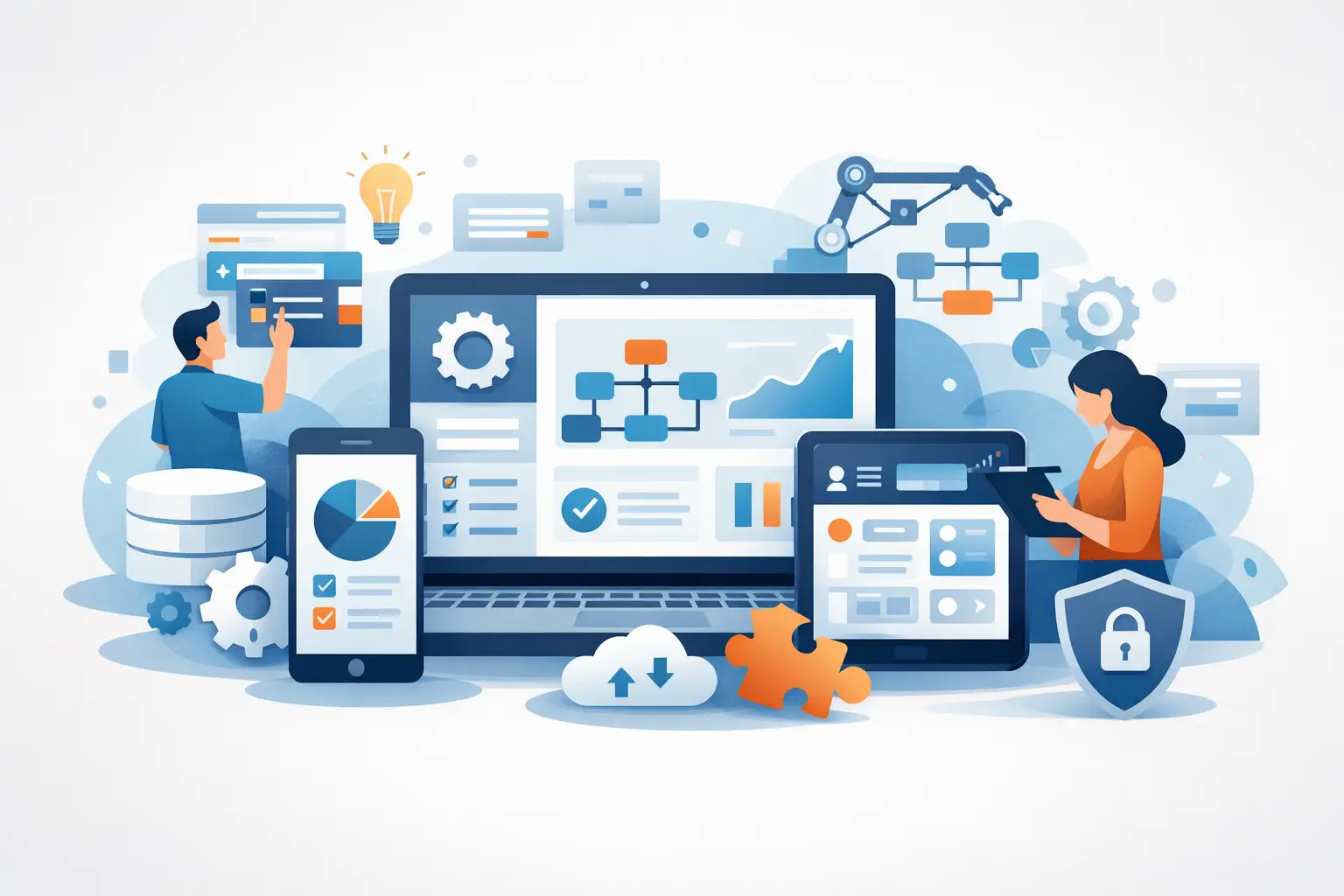
Most businesses do not start by asking for custom software. They start with a spreadsheet that has grown legs, a team rekeying the same data twice, or a customer process that feels far more manual than it should. That is where bespoke application software examples become useful. They show what tailored systems actually look like in day-to-day business, and why a made-to-fit solution can be a better investment than forcing generic software to behave.
For small and mid-sized businesses in particular, the appeal is not novelty. It is control. Bespoke software is built around how your company works, what your staff need, and where your bottlenecks sit. That can mean fewer workarounds, better reporting, and less dependence on disconnected tools that were never designed to speak to each other.
What bespoke application software examples tell you
A good example does more than describe a feature set. It reveals the business problem behind the build. Off-the-shelf software often looks cost-effective at first, but once you begin paying for extra licences, plugins, manual admin time, and awkward integrations, the picture changes.
Bespoke applications are usually the right fit when a business has a specific process that creates value and should not be bent to suit a standard platform. They also make sense when existing systems are holding back growth, compliance, service speed, or visibility across departments.
That said, custom software is not always the automatic answer. If your needs are simple and well served by a proven product, buying may still be the sensible choice. The case for bespoke gets stronger when your process is unusual, your systems are fragmented, or your team is spending too much time compensating for software limitations.
10 bespoke application software examples in real business use
1. Internal operations dashboards
Many firms rely on separate systems for sales, purchasing, delivery, finance, and customer support. An internal dashboard pulls the right information into one place and presents it in a way that matches how management actually makes decisions.
This kind of application might show outstanding quotes, order delays, stock availability, staff workloads, and monthly performance on one screen. Instead of chasing updates across multiple platforms, managers get a live operational view tailored to their roles.
2. Stock control and warehouse applications
Stock software is one of the clearest bespoke application software examples because inventory handling varies so much between businesses. A distributor, manufacturer, and eCommerce retailer may all carry stock, but they track it differently.
A tailored stock system can account for batch numbers, shelf locations, returns, damaged items, reorder rules, and links to purchasing or dispatch. The gain is not just better stock accuracy. It is faster order fulfilment and less money tied up in avoidable over-ordering.
3. Customer portals
A customer portal gives clients direct access to the information and actions relevant to them. That might include placing orders, downloading documents, tracking project progress, approving work, or raising support requests.
For service-based companies, this can reduce email traffic and improve customer experience at the same time. For product-based businesses, it can make repeat ordering far easier. The strongest portals are built around the customer journey rather than a generic login area with too many options and too little purpose.
4. Job management systems
Businesses that schedule engineers, consultants, installers, or field teams often outgrow standard booking tools quickly. A bespoke job management system can handle quoting, scheduling, route planning, worksheets, site notes, invoicing, and follow-up in one place.
This matters because job-based businesses run on coordination. If office staff, field staff, and customers are all working from different information, delays and errors follow. A custom system reduces handoffs and keeps the whole job lifecycle visible.
5. Booking and reservation platforms
Booking software is common, but not all booking models are. A training provider, equipment hire company, leisure venue, or specialist clinic may all have rules that off-the-shelf platforms cannot support cleanly.
A bespoke booking application can account for capacity limits, staff availability, resource allocation, deposits, cancellations, waiting lists, and customer communication. The benefit is not only convenience for the end user. It also protects margin by reducing missed slots, manual administration, and double-booking.
6. Membership and subscription systems
Organisations with members, subscribers, or account-based services often need more than a payment tool. They may need tiered access, renewal management, digital content permissions, event eligibility, and tailored communication.
A custom membership system can connect those moving parts and make them manageable. This is especially useful where the organisation has grown over time and ended up with one tool for payments, another for emails, and another for member records.
7. Field service mobile apps
When staff work on the road or on client sites, paper forms and delayed updates create obvious friction. A bespoke mobile app can let engineers capture signatures, log parts used, upload photos, complete checklists, and sync job status back to the office.
The commercial value is easy to see. Invoices can go out faster, compliance records are easier to maintain, and the office team spends less time chasing missing details. It also improves service consistency, which matters when your reputation depends on what happens after the van leaves the yard.
8. Data processing and reporting tools
Some businesses do not need a customer-facing application at all. They need a system that takes data from several sources, cleans it, processes it, and turns it into useful reporting.
This might involve sales feeds, finance records, website activity, manufacturing output, or third-party supplier data. A bespoke reporting application can centralise those inputs and present the metrics that matter most. For decision-makers, that means fewer blind spots and less time spent questioning whose spreadsheet is correct.
9. eCommerce systems with tailored back-office logic
There is no shortage of eCommerce platforms, but the front-end shop is often only half the issue. The real challenge sits behind the scenes in pricing rules, stock synchronisation, trade accounts, fulfilment workflows, and product data handling.
A bespoke eCommerce application or custom back-office layer is useful where standard shops cannot reflect how the business actually sells. That is common in wholesale, made-to-order, or multi-channel businesses where pricing and fulfilment are more complex than a standard basket and checkout.
10. Integrated legacy replacement systems
One of the most valuable custom builds is not flashy at all. It replaces an ageing patchwork of desktop files, old databases, and manual routines with one modern application built around current operations.
This tends to happen in established businesses that have accumulated systems over many years. The old setup still functions, but only because experienced staff know how to keep it alive. A bespoke replacement reduces that risk and creates a stronger base for growth, reporting, and staff onboarding.
When bespoke software is worth the investment
The strongest case for bespoke software appears when the cost of staying put is already high. That cost might show up as duplicated admin, avoidable mistakes, weak visibility, slow response times, or lost business because your systems cannot support the service you want to offer.
It also becomes worthwhile when software is central to your operation rather than a supporting tool. If your system shapes how orders flow, how jobs are delivered, how customers interact, or how management tracks performance, the fit matters. A poor fit drains time every day.
There are trade-offs, of course. Bespoke software requires clear scoping, sensible planning, and a development partner who understands business operations as well as technical delivery. It can take longer to implement than buying a licence for an existing product. It also needs ongoing support if it is going to remain useful as the business changes.
That is why the quality of the build process matters just as much as the software itself. The right partner will challenge vague requirements, help prioritise features, and shape a system that works in practice rather than one that simply sounds good on a specification document.
How to judge bespoke application software examples properly
When looking at examples, do not focus only on the interface. Ask what problem the application solved, which manual tasks it removed, and how it connected with the rest of the business. Good software does not just look tidy. It reduces friction.
It is also worth asking whether the example was built around a genuinely specific workflow. Plenty of systems are described as custom when they are really just configured versions of standard tools. There is nothing wrong with configuration where it fits, but bespoke development should deliver something shaped around your actual operation.
For businesses considering the next step, the most useful question is simple: where are your team losing time because your systems do not match your process? That answer usually points to the best custom software opportunity, whether it is an internal platform, a customer portal, a mobile app, or an integrated database-led system.
At Compile (UK) Limited, that practical view matters. The goal is not software for its own sake. It is software built to exact requirements, with enough flexibility to support the way a business works now and the way it plans to grow next.
If your current tools are forcing compromises every week, the right bespoke application is not an indulgence. It is often the clearest route to a business that runs with less effort and more confidence.
Related Post