07 Aug
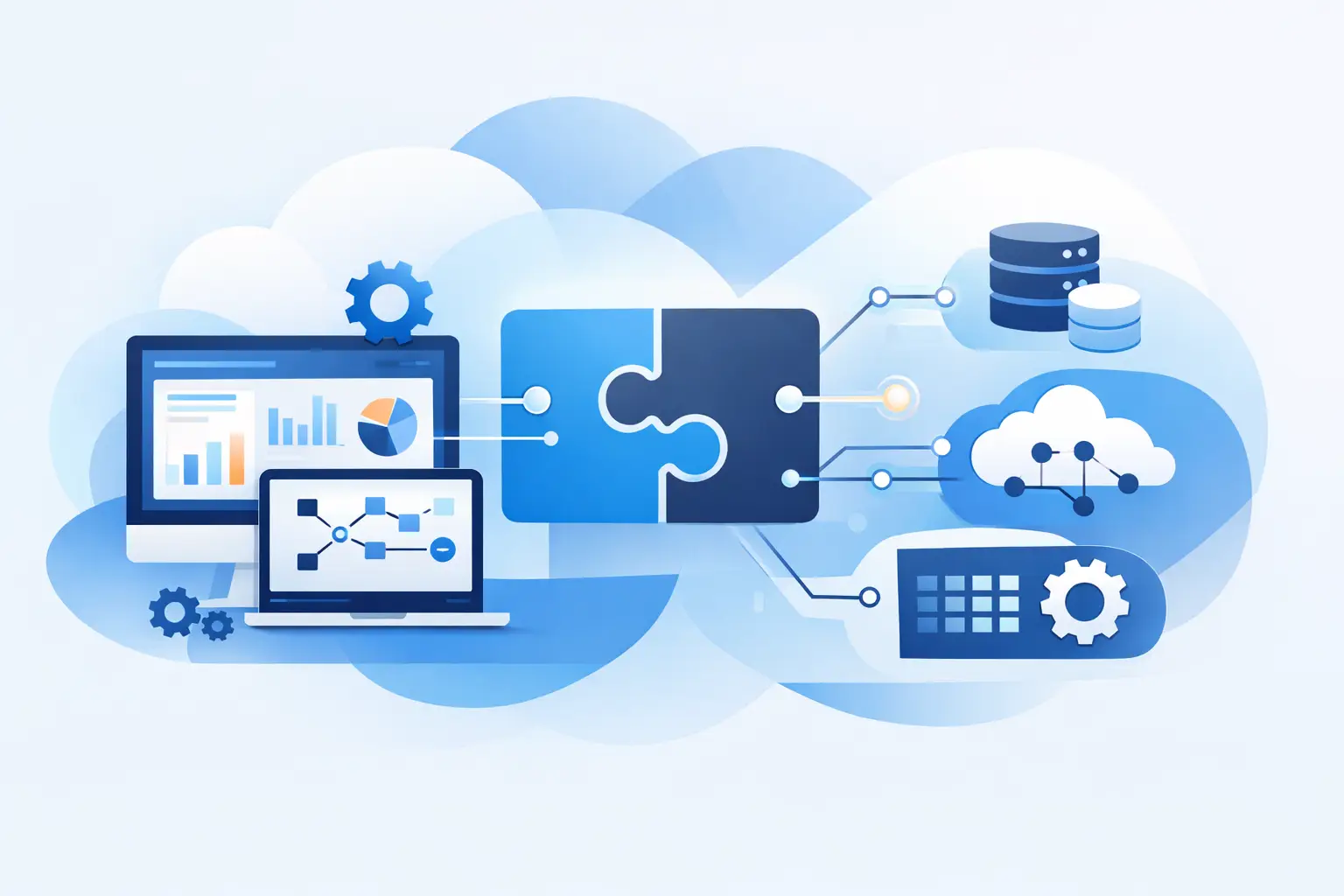
A new system should not force your team to abandon the tools that already run the business. The practical question is: can bespoke software integrate with existing systems without creating disruption, duplicated work or unreliable data? In most cases, yes. The answer depends on what systems are in place, how accessible their data is, and whether the integration is planned around real operational needs rather than assumptions.
For many small and mid-sized businesses, the need for bespoke software starts with a gap between existing tools. A CRM may hold customer details, accounting software may handle invoicing, spreadsheets may track operations, and a website may collect enquiries. Each tool may work well on its own, but the manual effort needed to keep them aligned can become costly.
Why businesses need integrated bespoke software
Off-the-shelf software is often designed to suit the widest possible market. It may provide a standard connection to a few popular platforms, but it cannot always reflect the way your staff process orders, manage jobs, approve work or communicate with customers.
Bespoke software can be built around those processes. Rather than replacing every existing platform, it can act as the layer that brings the right information and actions together. This might mean a web portal that sends approved orders to an accounts package, a mobile app that updates a central job management system, or an internal dashboard that combines data from several sources.
The business benefit is not integration for its own sake. It is reducing rekeying, avoiding conflicting records and giving people access to information when they need it. A warehouse team should not have to chase the sales office for an order update, and a director should not need three spreadsheets to understand current performance.
How bespoke software integrates with existing systems
Integration is the controlled exchange of information between systems. It can be simple, such as passing a website enquiry into a CRM, or more involved, such as synchronising stock, customer records, payments and delivery status across multiple applications.
The best method depends on the technology already in use.
APIs and direct system connections
Many modern business platforms provide an API, which is a documented way for other software to securely read or update selected data. A bespoke application can use an API to create customer records, retrieve stock levels, update a job status or post an invoice.
API integration is often the preferred approach because it is structured, traceable and less dependent on manual intervention. However, not every API provides access to every feature. Some platforms restrict particular functions to higher subscription levels, and others impose limits on how much data can be exchanged at a time. These limitations should be identified before a project scope is agreed.
Database integration
Older desktop applications and internally hosted systems may store information in a database that can be accessed directly. Where appropriate permissions and safeguards are in place, bespoke software can read from or write to that database.
This can be effective, particularly where a business relies on a long-established system that remains central to its operations. It does need care. Direct database changes made without a clear understanding of the original software can cause errors, interfere with upgrades or compromise reporting. A sound integration design respects the rules and data structure of the system it is connecting to.
File-based exchanges
Some systems cannot support a live connection but can export and import data using CSV, XML or similar files. This is common with specialist industry software, legacy accounts packages and supplier systems.
File exchange is not always instant, but it can still save substantial administrative time. For example, a bespoke order platform could produce a correctly formatted file for import into an existing fulfilment system each evening. If updates only need to happen daily, this may be more proportionate than building a real-time connection.
Middleware and central data services
When several platforms need to exchange information, a central integration service may be the right option. Instead of building every system-to-system connection separately, bespoke software can manage data rules in one place.
This approach is useful when businesses have multiple sales channels, field staff, customer portals and internal applications. It also makes future changes easier to manage. Adding a new eCommerce site, for instance, is less disruptive when there is a clear central route for product and order data.
Start with the process, not the technology
A successful integration project begins by mapping how work currently moves through the business. That includes the systems involved, the people responsible, the information being entered and the decisions made at each stage.
Consider an engineering business that receives an enquiry through its website. The sales team qualifies it, creates a quote, schedules work, sends engineers to site, orders parts and invoices the customer. If each stage is handled in a different system, the integration should reflect the actual handovers between departments. Connecting software simply because a connection is technically possible rarely delivers value.
It is also necessary to decide which system is the source of truth for each type of data. Customer addresses may belong in the CRM, financial records in the accounts system and live job progress in an operations platform. Without this clarity, two systems can overwrite each other or staff can be left unsure where they should make changes.
The risks to manage before development begins
Integration is highly achievable, but it should not be treated as a small add-on. The most common problems arise when businesses assume data is cleaner or systems are more flexible than they really are.
Duplicate customer records, inconsistent product codes and incomplete spreadsheets can all be carried into a new solution unless they are identified early. A discovery phase gives the development team time to inspect sample data, review existing workflows and test how systems respond to common actions.
Security also requires close attention. An integration may handle personal information, payment details, commercial pricing or employee data. Access should be limited to what the connection genuinely needs, credentials must be protected, and activity should be logged where appropriate. For UK businesses, data handling should also support their responsibilities under UK GDPR.
Reliability matters as much as security. Systems can be offline for maintenance, an API can temporarily fail, or a user can enter unexpected information. Good bespoke software does not assume every request will succeed first time. It records failures, avoids creating duplicates and gives authorised staff a practical way to review or retry exceptions.
Phased delivery reduces disruption
Replacing everything at once is rarely the safest route. A phased project can focus first on the area causing the greatest operational friction, then build out further connections once the initial process is proven.
For example, a business might begin by connecting its website forms to its customer database. The next phase could add quotation tools, followed by job scheduling and reporting. This allows staff to adapt gradually and helps decision-makers measure whether each stage is producing the expected return.
Testing should involve the people who will use the system every day. Office staff, managers, field teams and customer service colleagues often spot practical issues that are not visible in a technical specification. Their feedback can shape permissions, screen layouts, notifications and the timing of data updates before the solution is rolled out more widely.
Training and support are equally valuable. A well-built integration can still fail to deliver if staff do not understand what has changed or who owns exceptions. Businesses need clear guidance on where to enter data, how updates flow between systems and what to do if something does not look right.
When integration may not be the right answer
There are cases where integrating with an existing system is not commercially sensible. A platform may be unsupported, have no safe method of accessing data, or be so heavily customised that connecting to it introduces unnecessary risk. In other cases, the cost of maintaining an integration may exceed the benefit it provides.
A review may show that replacing one outdated system is the better long-term decision. It may also reveal that a simpler export process is sufficient. Real-time updates sound attractive, but if stock is checked once each morning and changes infrequently, a scheduled daily exchange may meet the business need at a lower cost.
The right solution is the one that supports your operations reliably and can grow with the business. Compile (UK) Limited approaches bespoke development with that practical focus: understanding the systems you rely on, defining the outcome you need and building technology around the way your business works.
A clear integration plan turns existing software from a collection of separate tools into a more useful working system. Start with the process that causes the most delay or repetition, establish where the data should live, and make the first improvement count.
Related Post