30 Jun
If your team is juggling spreadsheets, rekeying the same data into multiple systems, or shaping your processes around software that was never designed for your business, the question of what is bespoke software development becomes more than a technical one. It becomes a commercial one. At that point, the real issue is not software for software’s sake. It is whether your systems are helping the business move faster, serve customers better and operate with less friction.
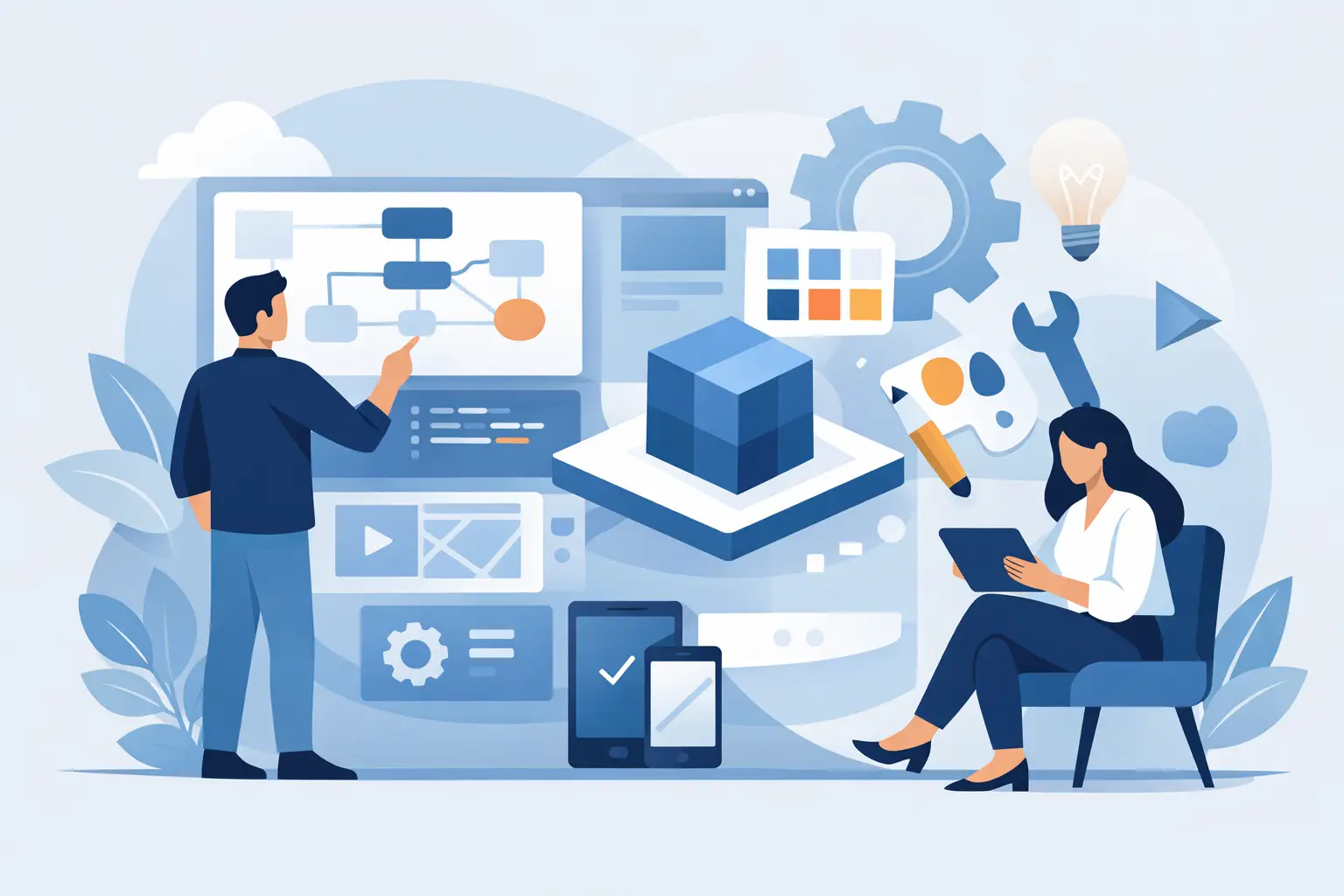
Bespoke software development is the design and build of software tailored to a specific business, team or process. Instead of buying a standard product and adjusting your operations to fit it, bespoke software is created around the way you already work, or around the way you want to work in future. That might mean an internal desktop tool, a customer portal, a mobile app, a web platform, a data processing system or a fully integrated solution that connects several parts of the business.
For many small and mid-sized businesses, that distinction matters. Off-the-shelf systems can be useful, but they are built for broad markets. Your business is not broad. It has its own workflows, service model, reporting needs, approval chains, customer journey and growth plans. Bespoke development exists to reflect that reality.
What is bespoke software development in practice?
In practice, bespoke software development means working with a software partner to define a business problem, shape a solution and build a system to meet exact requirements. The process usually starts with discovery. That is where the developer learns how your business currently operates, where delays happen, what data matters and what the software needs to achieve.
From there, the software is planned, designed, developed and tested before launch. In many cases, it continues to evolve after release. Businesses change, teams grow and customer expectations shift. Good bespoke software is not just written once and forgotten. It is supported and improved so it keeps delivering value.
This is one reason bespoke projects appeal to companies that have outgrown patchwork systems. When software is built around your operation, it can remove duplicate tasks, centralise information and reduce the manual work that slows people down. It can also give management better visibility, because reporting and dashboards are designed around the metrics that matter to your business rather than whatever a generic package happens to provide.
How bespoke software differs from off-the-shelf products
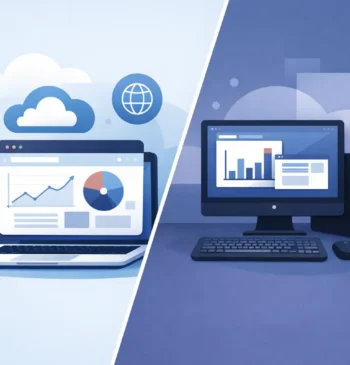
The simplest difference is ownership of fit. With off-the-shelf software, the vendor decides the product and your business adapts. With bespoke software, the system is built to support your processes, users and goals.
That does not mean bespoke is always the right answer. Standard software can be quicker to deploy and cheaper at the start, especially for common needs such as accounting, payroll or basic customer relationship management. If your requirements are ordinary and the software does the job well, there may be no need to build something custom.
The case for bespoke becomes stronger when your business has specialist requirements, relies on several disconnected systems, or loses time and money because existing tools do not align with the way your team works. It is also a sensible option when customer experience is part of your competitive edge and you need a website, application or portal that offers something more specific than a template solution can provide.
In other words, bespoke software is not about choosing the more technical route. It is about choosing the more suitable one.
Why businesses invest in bespoke software development
Most businesses do not commission custom software because they want something complicated. They do it because they want something simpler for the people using it day to day.
A well-planned bespoke system can reduce administrative load, improve accuracy and make work easier to manage. It can replace several tools with one connected platform, automate routine actions and ensure data moves properly between departments. That matters whether you are processing orders, managing field teams, handling customer requests or tracking stock and service delivery.
There is also a strategic benefit. When your software reflects your exact model, it becomes easier to protect what makes your business different. Generic tools often smooth everyone into the same shape. Bespoke systems allow you to preserve useful ways of working and build better ones where needed.
For growing companies, scalability is another factor. It is common to start with a small operational workaround – a spreadsheet here, a plug-in there, a standalone app used by one department. Over time, those workarounds become hard to manage. Bespoke development gives you the opportunity to replace that patchwork with a system designed to grow with the business rather than hold it back.
What bespoke software can include
Bespoke development covers a wide range of systems. It may be customer-facing, internal or both.
For one business, it could be a web-based booking platform with integrated payments and reporting. For another, it might be desktop software used by staff to manage inventory, workflow approvals and customer records in one place. Some companies need mobile applications for field teams. Others need data warehousing and processing tools that turn scattered information into something useful for decision-making.
Integration is often a large part of the brief. Many businesses already have some systems in place, and the real value comes from connecting them properly. That might involve linking an eCommerce website to stock management, joining a CRM to a support platform, or building a central database that allows multiple teams to work from the same live information.
This is where an experienced development partner adds real value. The goal is not simply to create new software. It is to make the overall operation work better.
The trade-offs to understand before you start
Bespoke software offers flexibility, but it also requires commitment. A custom build takes more planning than signing up to a ready-made platform. It needs clear communication, sensible scoping and a realistic budget.
Cost is usually the first question. Bespoke software often involves a higher upfront investment than a subscription product. That is true. The more useful question is whether the software will save time, reduce errors, improve service or create opportunities that justify the spend. In many cases, the return comes from operational efficiency and stronger control over the business rather than from the software alone.
Timeframe is another consideration. Good custom development is not instant. If a project is rushed before the requirements are properly understood, businesses can end up paying twice – once for the initial build and again to correct it later. That is why discovery and planning matter.
There is also the question of support. Bespoke software should not be treated as a one-off purchase. It needs maintenance, updates and occasional development as needs change. The strongest outcomes usually come from a long-term relationship with a partner who understands both the technology and the business context behind it.
How to tell if bespoke software is right for your business
A simple test is to look at where your current systems create work rather than remove it. If your team spends time copying data between platforms, creating manual reports, fixing avoidable mistakes or inventing workarounds for basic tasks, there is likely a gap between your software and your operation.
Another sign is when your business model does not fit neatly into standard tools. That is common in companies with specialist services, unusual internal workflows or a customer journey that needs more than a generic website and a few plug-ins.
It is also worth considering bespoke software when growth is exposing cracks in the way systems connect. What worked for five people often fails at twenty. What worked for one service line can become inefficient across several. Custom development gives you the chance to build on firmer ground.
For businesses without an in-house technical team, that can sound daunting. It should not. A good development partner will guide the process in plain English, help refine early ideas and recommend what is necessary rather than what is fashionable. That practical support is often just as important as the code itself. Companies such as Compile (UK) Limited work in that space, helping organisations turn operational needs into software that is useful, manageable and built for the real world.
What a good bespoke software project looks like
A successful project starts with clarity. Not a perfect technical specification on day one, but a clear understanding of the business problem, the users involved and the result you need. From there, the project should be shaped around priorities, budget and expected value.
It should also involve challenge. If every request is accepted without discussion, the end result can become bloated and harder to use. The right software partner will ask sensible questions, identify risks early and help you focus on features that genuinely improve the operation.
Most importantly, the finished product should feel practical. Staff should understand it. Customers should find it straightforward. Management should be able to see the benefit in time saved, service improved or decisions made more easily.
That is really the answer to what is bespoke software development. It is software built around your business, not a business forced around software. When done well, it does not just replace old tools. It gives you a clearer, more efficient way to run the parts of the business that matter most.
Related Post