06 Jul
If your team is juggling spreadsheets, re-entering the same data into three systems, or forcing a generic platform to fit the way your business works, the question of what is custom application development stops being theoretical quite quickly. It becomes a commercial decision. Do you keep adapting your processes to software that was built for everyone, or invest in software built for you?
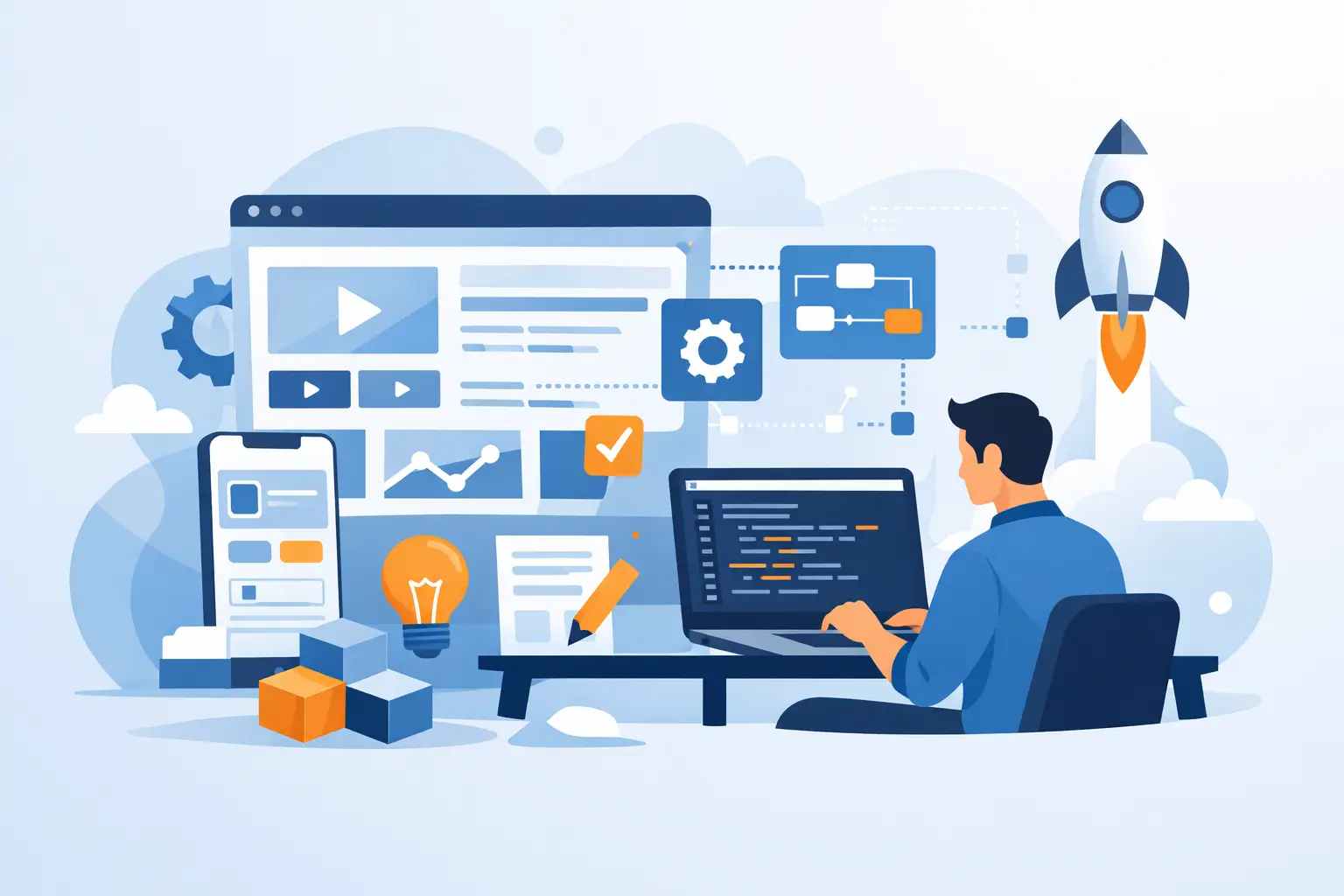
Custom application development is the process of designing, building and maintaining software to meet the specific needs of a particular business, team or organisation. Instead of buying an off-the-shelf product with fixed features, you commission an application that reflects your workflows, users, reporting needs, integrations and long-term goals.
That application might be a customer-facing mobile app, an internal operations platform, a desktop tool used by a specialist team, or a web-based system that brings several disconnected processes into one place. The key point is simple: it is built around your business, not the other way round.
What is custom application development in practice?
In practical terms, custom application development starts with a business problem, not a technology trend. A company may need to reduce admin time, improve visibility across departments, replace ageing software, or give customers a better digital experience. The software is then planned and built to address that exact requirement.
That usually involves discovery, specification, design, development, testing, deployment and ongoing support. Some projects begin with a clear set of requirements. Others start with a rough idea and need a development partner to help shape the scope, priorities and roadmap.
This is one reason bespoke development appeals to small and mid-sized businesses. You do not need an internal technical team to know every detail on day one. You need a clear business objective and a partner who can turn that into a working product.
How custom software differs from off-the-shelf tools
Off-the-shelf software has a clear place. It is often faster to buy, cheaper at the start, and perfectly suitable for common needs such as accounting, email marketing or basic project management. If your business can work comfortably within the limits of a standard product, it may be the right choice.
The problem starts when those limits begin to affect performance. Perhaps your team is using workarounds every day. Perhaps key data is spread across separate systems that do not talk to each other. Perhaps you are paying for licences, plug-ins and manual effort just to replicate one joined-up process.
Custom software addresses that by fitting your process, your users and your priorities. You are not selecting from a menu of pre-set functions and hoping they cover the essentials. You are deciding what the application needs to do and building around that.
There is a trade-off, of course. Bespoke systems usually require more upfront investment and more planning than buying a subscription tool. They also need the right development approach, because badly scoped custom work can become expensive. The value comes from alignment, efficiency and control over time.
When custom application development makes sense
Not every business needs a custom-built platform. But there are strong signs that the model is worth considering.
One is process complexity. If your operation has unique approval flows, pricing logic, scheduling requirements or compliance steps, standard software may always feel like a compromise. Another is integration. If you rely on multiple systems for sales, operations, stock, reporting and customer service, a custom application can act as the glue that connects them.
It also makes sense when customer experience matters. If your website, portal or mobile app is a core part of how customers interact with your business, a generic experience may limit growth. A bespoke application gives you more control over usability, functionality and performance.
Then there is scalability. Businesses often outgrow the collection of tools they started with. What worked for five staff becomes inefficient for fifty. At that stage, custom development is less about having something fancy and more about creating infrastructure that supports the next phase of growth.
The main types of custom applications
Custom application development covers a wide range of software, and the right format depends on how your business operates.
A web application is often the best option when users need access through a browser across different locations and devices. This can suit customer portals, booking systems, dashboards and internal platforms.
A mobile application is useful when your users are regularly on the move, whether they are customers placing orders or field teams completing tasks on site. A desktop application can still be the right fit for specialist environments where performance, local hardware access or controlled usage matters.
Many businesses also need integrated systems rather than a single standalone application. That could mean linking an eCommerce site to stock management, connecting a CRM to a finance process, or pulling data from several sources into one reporting environment. In those cases, the application is not just a tool in isolation. It becomes part of the way the business runs day to day.
What the development process usually looks like
The best projects are built around clarity. Before any code is written, there needs to be a proper understanding of the business, the users and the outcome you want.
That discovery stage is where priorities are set. Which problem matters most? Which features are essential at launch, and which can wait? What existing systems need to be retained, replaced or integrated? This stage prevents a common mistake: trying to build everything at once.
After that, the application is specified and designed. This includes structure, user journeys, technical decisions and interface planning. Development then happens in stages, with testing throughout rather than left until the end.
Once launched, support still matters. Software is not a one-off purchase that sits untouched for years. Businesses change, teams grow, customer expectations shift and regulations move. A useful custom application should be maintained and improved over time.
Benefits of custom application development
The most obvious benefit is fit. The software is designed around the way your organisation works, which can reduce duplicate effort, improve accuracy and remove friction from daily tasks.
There is also better visibility. When data is centralised and processes are connected, managers can make decisions based on current information instead of piecing together reports from different systems. That can affect staffing, stock, service delivery and cash flow.
Custom applications can also improve customer experience. Faster service, clearer communication, easier self-service tools and fewer errors all make a difference. Internally, teams often gain time back because they are no longer repeating manual actions that software should be handling.
Another advantage is control. You can decide how the system evolves, what it integrates with, and how it supports future plans. You are not waiting for a third-party software provider to release a feature that may or may not arrive.
The questions businesses should ask before investing
A custom build should solve a meaningful business issue. That sounds obvious, but it is easy to focus on features before defining the underlying problem.
Start by asking what is slowing the business down, where mistakes happen, and which processes rely too heavily on manual work. Then ask what success would look like in practical terms. Less admin? Faster turnaround? Better reporting? Improved customer retention?
You should also be realistic about budget, timeline and internal involvement. Good software projects need input from the people who understand the business best. Even if a development partner handles the technical side, your team still needs to guide priorities and feedback.
Finally, think beyond launch. The right question is not only how much the application costs to build, but what it saves, improves or enables over the next few years.
Choosing the right development partner
Custom software is only as useful as the process behind it. A capable development partner should be able to translate business needs into clear recommendations, explain options in plain English and keep delivery grounded in commercial reality.
That means more than coding skill. It means understanding workflows, pressure points, user adoption and support requirements. It also means being honest when a simpler route would do the job just as well.
For many businesses, especially those without in-house technical leadership, this relationship matters as much as the software itself. The right partner provides structure, clarity and continuity from first discussion through to support after launch. That is where firms such as Compile (UK) Limited can offer real value – not simply by building software, but by helping businesses shape practical systems that genuinely support the way they work.
Custom application development is not about building technology for the sake of it. It is about giving your business software that fits properly, works efficiently and can grow with you, which is often the difference between coping with your systems and actually benefiting from them.
Related Post